

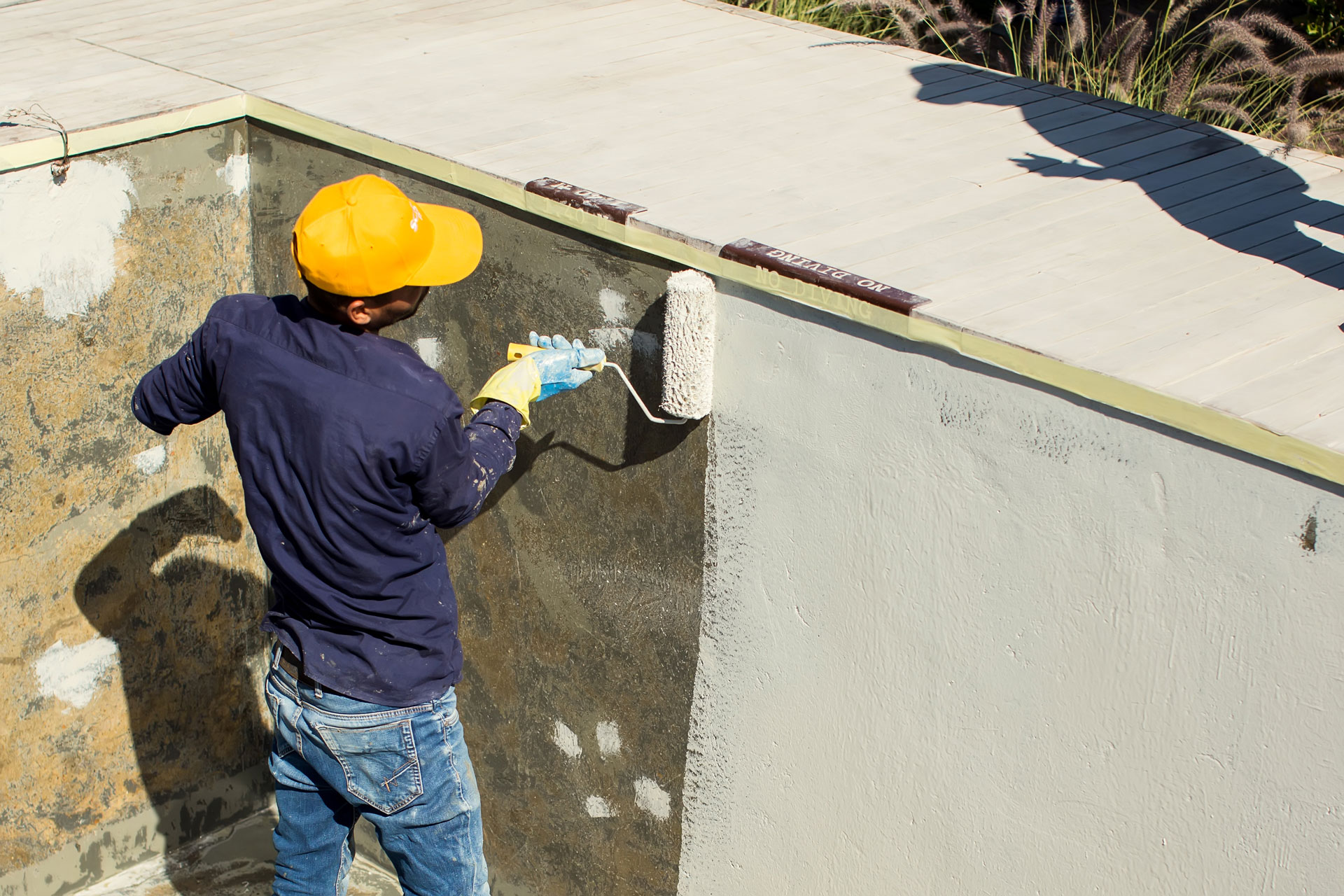
As your pool ages, the finish naturally begins to show wear and tear. You might notice chalky residue, persistent stains, or rough patches that snag your swimsuit. When faced with the expense of a complete remodel, many homeowners look for a budget friendly alternative. It’s common to wonder if painting or sealing the concrete can solve the problem. If you’re trying to avoid a full resurfacing project, swimming pool coatings often sound like the perfect solution. However, applying a layer of paint over deteriorating material rarely provides the long lasting results you actually want.
Swimming Pool Coatings and Older Plaster Pools: What Homeowners Should Understand
Swimming pool coatings are often used to create a fresh surface over an existing pool finish. Depending on the product and application, they may be designed to improve appearance, add a protective layer, or help extend the usable life of the pool surface.
That sounds appealing when your pool looks worn but still holds water. The catch is that coatings depend heavily on the condition of the surface they are applied to. If the plaster underneath is solid, clean, properly prepared, and not actively deteriorating, a coating may have a better chance of performing as expected.
If the plaster is failing, the coating has a much harder job.
A coating bonds to the existing surface. It doesn’t rebuild weak plaster, correct deeper surface damage, or stop widespread deterioration. If the plaster pool surface is unstable, the new layer can only be as reliable as what it is attached to.
Why a Coating May Seem Like the Easiest Fix
Most homeowners don’t love hearing that their pool needs major work. If the pool still functions, it’s natural to hope that the surface just needs a small refresh.
It’s easy to see why swimming pool coatings attract pool owners. A fresh layer of epoxy or rubberized paint immediately brightens the water and hides cosmetic flaws. It takes less time to apply than new cement, and the upfront price tag is significantly lower. For a quick cosmetic upgrade, swimming pool coatings deliver instant gratification.
However, concern comes when a coating is used to avoid a bigger problem. If your plaster is rough enough to scrape feet, if stains keep returning, or if areas sound hollow when tapped, the surface may be telling you something more important—the issue may not be appearance alone. It may be a sign that the plaster itself is wearing out.
Roughness Usually Points to Surface Breakdown
A rough pool surface is one of the clearest signs that the finish is aging. Plaster can become rough as the cement paste wears away, leaving more aggregate exposed. Poor water balance can speed up that process, especially if the water becomes aggressive and begins pulling minerals from the surface.
A coating may make the pool look better at first, but it won’t fully correct roughness if the existing surface is deeply etched, uneven, or deteriorated. In some cases, the rough texture can also make it harder for a coating to bond evenly unless extensive preparation is done first.
If roughness is isolated to a small area, repair options may be possible. If the entire plaster pool surface feels abrasive, full resurfacing may be the more dependable solution.
Staining Can Be Cosmetic, or It Can Be a Warning Sign
Stains are another reason homeowners look into swimming pool coatings. A stained pool can look older than it really is, and covering the discoloration may seem like the most sensible fix.
Some stains are surface level. They can come from leaves, metals, minerals, or organic debris. Other stains are more connected to aging plaster, improper water chemistry, or long term surface wear. If the surface has become porous, stains may keep settling in, even after cleaning.
A coating can cover stains, but it doesn’t always address the cause. If the stain is related to water chemistry, mineral issues, or a deteriorating finish, the discoloration may return in a different form. Before deciding on a coating, you should really understand why the pool is staining in the first place.
Delamination and Peeling Are Bigger Concerns
Delamination happens when layers of the pool finish begin to separate. You may notice hollow sounding areas, loose spots, flaking, or sections that seem to lift away from the surface.
Make no mistake, this is far more than an ugly cosmetic flaw..
If your aging plaster is actively delaminating, painting over it will only waste your time and money. The fresh paint might adhere perfectly to the top layer of plaster. However, since that plaster is already separating from the pool shell beneath it, your brand new finish will simply peel right off with it. Blistering and bubbling are almost guaranteed because the foundation was never stable enough to hold the new material.
When you reach this stage of deterioration, a quick patch isn’t going to cut it. The most reliable solution is to strip away the compromised material completely and invest in a proper resurfacing.
When Swimming Pool Coatings Make Sense
A coating can be a viable option if your pool structure is completely solid and the issues you are seeing are purely cosmetic. However, success hinges entirely on meticulous surface preparation. Before a single drop of product goes down, the pool requires deep cleaning, sanding, grinding, and minor patch repairs. Every bit of old paint or loose debris must be completely stripped away.
Good preparation isn’t a minor detail, but the single most important factor determining whether your new finish lasts for a few seasons or fails prematurely.
A coating may be more reasonable when:
- The plaster is still firmly bonded
- The surface is not severely rough or crumbling
- Staining is mostly cosmetic
- There are no widespread hollow spots
- The pool owner understands the expected lifespan and maintenance needs
Even in a best case scenario, look beyond the immediate price tag. Weighing the upfront savings of a coating against the long term value of a full resurfacing will help you make the right investment for your backyard.
When Full Resurfacing Is the Better Choice
When your plaster pool surface finally reaches the end of its lifespan, full resurfacing is almost always the better option. If you are dealing with widespread roughness, stubborn stains that keep coming back, peeling, delamination, or hollow spots that seem to expand every week, your pool is sending a clear message.
Resurfacing treats the actual root problem rather than just masking the symptoms. Instead of slapping a temporary patch over deteriorating material, this process completely replaces the worn concrete with a brand new interior finish. For an older pool, this is the only way to get a true, reliable reset.
This doesn’t mean you must rush into a massive renovation at the first sign of wear. However, you should be cautious about choosing a coating simply because it looks like an easier shortcut. If the underlying plaster is fundamentally failing, a coating will only delay the inevitable, often making the eventual repair much more expensive.
Making the Right Call for Your Pool
Swimming pool coatings certainly have their place, but they are never a magic cure for an older plaster pool surface. Everything comes down to the condition of the material underneath.
If your plaster is still structurally sound and you just want to brighten up some cosmetic dullness, a coating is absolutely worth discussing. But if you are staring at widespread roughness, deep staining, peeling, or chipping, full resurfacing is the only practical, long term solution.
Before you commit to a path, have an expert inspect the pool closely. A smart decision always starts with knowing whether you are dealing with a surface that just needs a quick cosmetic refresh or a finish that has officially run its course.