

Owning both a swimming pool and a hot tub sounds like the perfect backyard arrangement. You can cool off during a warm afternoon, then move to the spa once the temperature drops. The water care, however, isn’t nearly as interchangeable as the experience.
A pool and a hot tub both need sanitizer, stable pH, proper alkalinity, and regular testing. Beyond those basics, they behave very differently. Hot tubs hold far less water, operate at much higher temperatures, and usually handle a heavier concentration of bathers. A chemical adjustment that barely moves the needle in your pool could send your spa chemistry completely off course.
Keeping balanced pool water doesn’t automatically mean you know how to balance a hot tub. Treating the two systems as though they are identical can lead to cloudy water, irritated skin, damaged equipment, and a frustrating cycle of adding more chemicals without fixing the actual problem.
Here are some of the most common mistakes homeowners make when maintaining both.
Mistake #1: Using the Same Chemical Routine for Both
Pools and hot tubs may use some of the same chemical categories, but they rarely need the same amounts or maintenance schedule.
A typical residential pool contains thousands of gallons of water. A hot tub may contain only a few hundred. Warm spa water also creates an environment where contaminants can build up quickly, especially after several people have been soaking.
One extra scoop of sanitizer may not have much effect on a large pool. The same scoop could raise the sanitizer level in a hot tub far beyond the safe range.
Always calculate chemical doses using the actual water volume of each vessel. Never estimate a spa dose based on what you normally add to the pool. Even when the label lists directions for both, the measurements will be very different. The same careful approach applies when comparing chlorine versus bromine for hot tub care, since each sanitizer has its own dosing and maintenance requirements.
Mistake #2: Assuming Clear Water Is Balanced Water
Clear water can be misleading.
A pool or hot tub may look perfectly inviting while still having low sanitizer, unstable pH, or improper alkalinity. Water clarity tells you what the water looks like. A test tells you how it’s actually behaving.
Balanced water generally requires attention to:
- Sanitizer
- pH
- Total alkalinity
- Calcium hardness
- Stabilizer, when appropriate for the system
For home pools and hot tubs, the recommended pH range is generally between 7.0 and 7.8. Free chlorine levels should stay at or above 1 part per million in pools and 3 parts per million in hot tubs. Because some products and equipment require more specific ranges, always check your system manual and follow the directions on the chemical label.
Test both bodies of water separately. A good pool reading says nothing about the current condition of your hot tub.
Mistake #3: Treating Pool Chlorine and Spa Sanitizer as Interchangeable
One of the biggest areas of confusion involves chlorine versus bromine for hot tub maintenance.
Chlorine and bromine are both sanitizers, but they aren’t used in exactly the same way. Chlorine is common in swimming pools because it works quickly and can be economical for treating a large volume of water. Bromine is frequently used in spas because it performs well in warm water and remains effective across conditions commonly found in hot tubs.
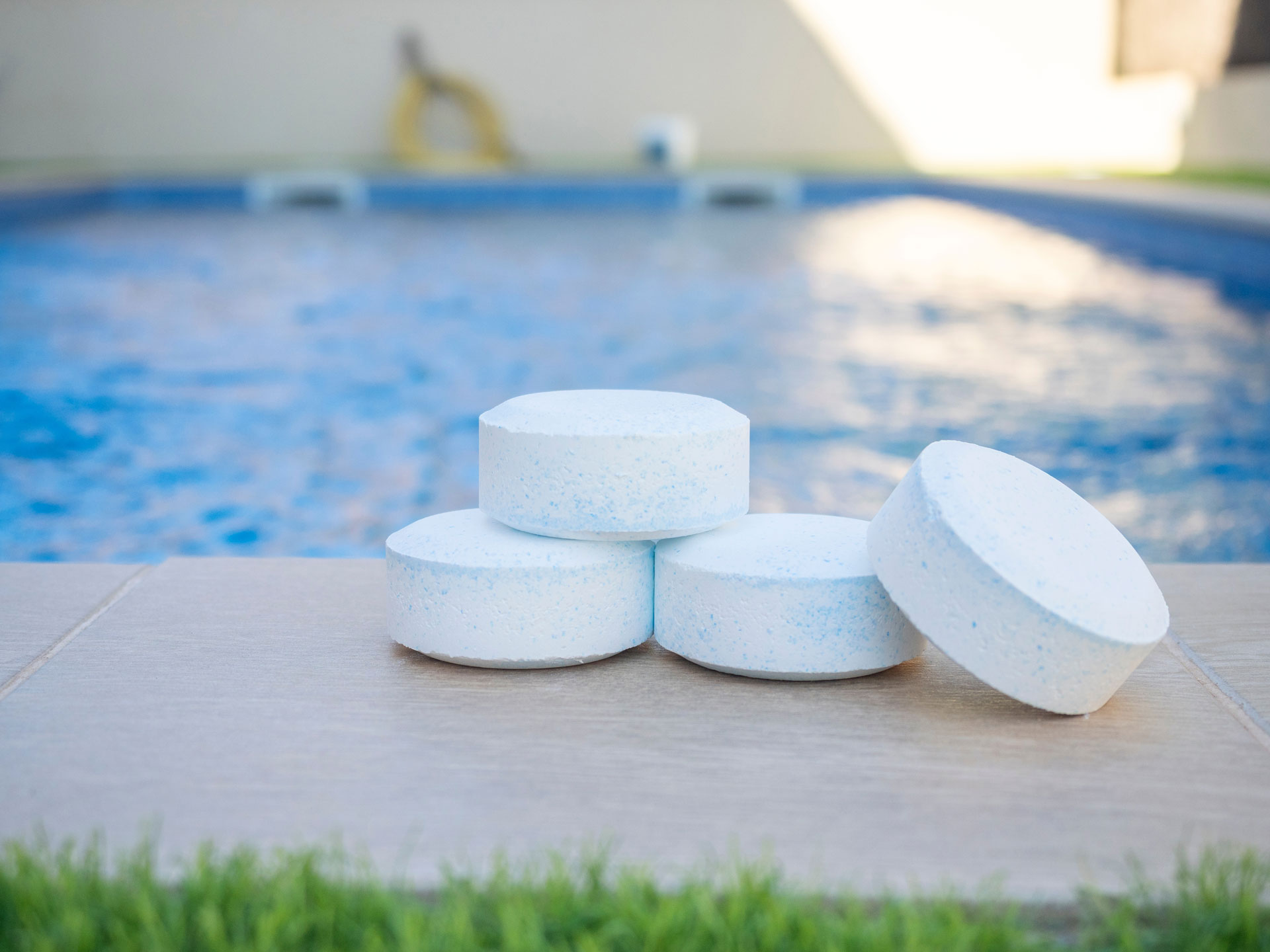
The products themselves may also have different concentrations, ingredients, and application instructions. Pool chlorine tablets, for example, shouldn’t simply be dropped into a spa floater unless the product is specifically labeled for hot tub use.
Accidentally mixing incompatible products can be dangerous. Keep pool chemicals and spa chemicals in their original containers, store them separately, and use dedicated measuring tools for each system.
Mistake #4: Adding Stabilizer to the Hot Tub Because the Pool Uses It
Outdoor pools often use cyanuric acid to protect chlorine from breaking down too quickly in sunlight. Hot tubs are usually covered, and their water is exposed to a completely different combination of heat, aeration, and usage.
We recommend against using cyanuric acid or stabilized chlorine products containing cyanuric acid in hot tubs. Too much stabilizer can reduce chlorine’s ability to disinfect the water effectively.
Check the active ingredients before using leftover pool sanitizer in your spa. Products commonly sold as dichlor or trichlor may contain stabilizer, even when the front of the package simply emphasizes chlorine.
A chemical that helps maintain balanced pool water may be unnecessary or unsuitable for the hot tub sitting a few feet away.
Balanced Pool Water and Comfortable Spa Water Need Separate Plans
Your pool and hot tub may share the same backyard, but they shouldn’t share a single chemical routine.
The difference between chlorine versus bromine for hot tub care is only one part of the equation. Water volume, temperature, sanitizer demand, stabilizer use, and dosing requirements all need to be handled separately.
Label your supplies clearly, use separate measuring tools, and test each body of water before adding chemicals. Most importantly, follow the directions for the specific product and equipment rather than relying on the routine that works for the other system.
A little organization can prevent cloudy water, skin irritation, scaling, corrosion, and unnecessary chemical use. It also makes pool and hot tub care far less confusing.
When the chemistry refuses to settle down, Ole’s Pool and Spa can help identify what is throwing the water out of balance. Professional testing and routine pool or hot tub maintenance can take the guesswork out of water care while protecting your surfaces, plumbing, heater, and other equipment.