

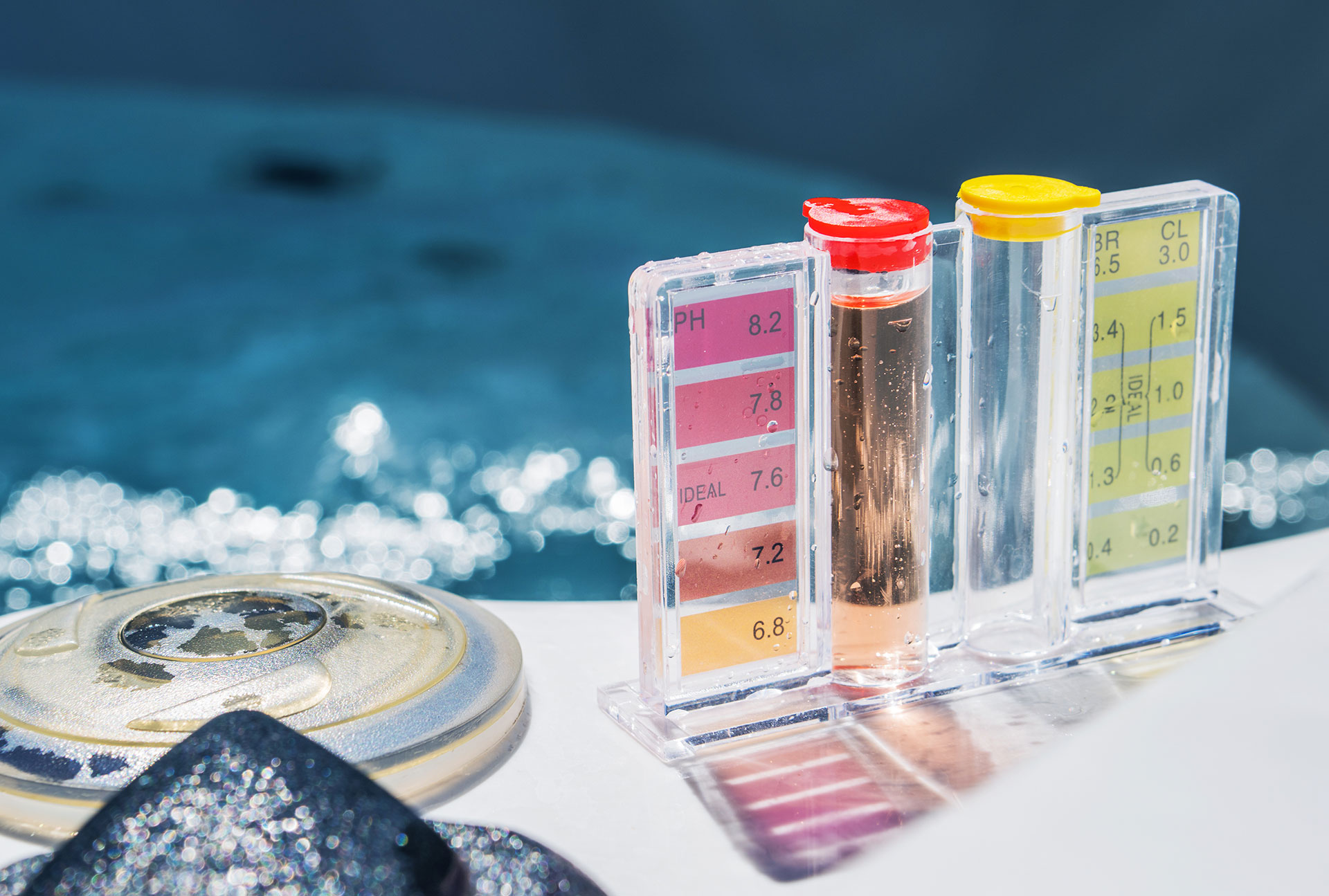
If you own a hot tub, you already know the truth about hot tub maintenance: the best system is the one you will actually keep up with. Most water problems aren’t caused by one “wrong” sanitizer. They come from a routine that doesn’t match real life, whether that means you travel a lot, you soak every night, you forget to test for two weeks, or you hate the smell of chemicals.
The goal is to choose a sanitizer that makes your hot tub chemical routine feel simple and realistic, not like a second job.
In this guide, we will compare chlorine, bromine, and saltwater systems in plain language, so you can learn what each one is good at, what it struggles with, and what kind of upkeep it asks from you.
Hot Tub Maintenance And Why Your Sanitizer Choice Matters
Sanitizer is what keeps your hot tub water safe, and it’s a core part of hot tub maintenance. It kills bacteria and helps prevent things like cloudy water, slime in plumbing lines, and that “something is off” smell that shows up when water chemistry goes sideways.
But sanitizer doesn’t work alone. Your water balance (pH, alkalinity, and calcium hardness), your filter, your bather load, and your temperature all affect how well a sanitizer performs. Hot water makes sanitizer burn off faster. Lots of bathers introduce oils, sweat, lotions, and detergents from swimsuits. That’s why choosing a sanitizer is really choosing a lifestyle match.
Think of it like this: the best sanitizer is the one that fits your tolerance for testing, dosing, and troubleshooting.
Chlorine For Hot Tubs: The Most Common, Most Flexible Option
Chlorine is the most common hot tub sanitizer for a reason. It’s effective, widely available, and usually the lowest cost. Most hot tub owners use chlorine in one of two forms: granular dichlor (often used at start-up) and liquid chlorine or bleach (sometimes used for ongoing dosing).
What Chlorine Is Good At
- It works fast and kills contaminants quickly
- It’s easy to find and easy to understand
- It can be very affordable long-term
- It’s flexible if your usage changes from week to week
If you use your hot tub frequently and you don’t mind adding small doses regularly, chlorine can be a great fit.
What Chlorine Struggles With
Chlorine is more sensitive to pH. If your pH creeps up, chlorine becomes less effective. In a hot tub, pH often rises naturally because jets create aeration. That means chlorine users sometimes feel like they are always nudging pH back down.
Chlorine can also feel harsher on skin for some people, especially if water isn’t balanced or if combined chlorine (chloramines) builds up. That “pool smell” is usually not too much chlorine. It’s chlorine that has already reacted with contaminants.
Chlorine Is Best For You If…
- You want the simplest, most common approach
- You’re okay testing a few times per week
- You use the tub often and can dose consistently
- You want lower ongoing costs
Bromine For Hot Tubs: Often Easier To Maintain Day To Day
Bromine is very popular for hot tubs, especially for people who want stable sanitation with less constant tweaking. Bromine is typically used with a bromide bank (a base level of bromide in the water) and then activated using an oxidizer. Many people use bromine tablets in a floater to maintain levels.
What Bromine Is Good At
- It stays effective at higher temperatures
- It tends to be more forgiving if pH drifts a bit
- It’s often easier to keep steady with tablets
- It can be gentler for some people who dislike chlorine smell
For many owners, bromine is more of a “set it and check it” hot tub chemical routine than chlorine, especially if you are consistent about refilling the floater and shocking on schedule.
What Bromine Struggles With
Bromine can be more expensive than chlorine. It can also be harder to completely “reset” the water if it gets funky, because bromamines (the byproducts of bromine) behave differently than chloramines. Many bromine users still need regular oxidation (shocking) to keep water clear.
Also, if you prefer using mineral systems or specific add-ons, you’ll want to make sure everything is compatible.
Bromine Is Best For You If…
- You want steadier sanitizer levels with less daily dosing
- You’re not in the tub every day but want water to stay stable
- You prefer using a floater and tablets
- You want a system that feels a bit more forgiving
Saltwater Systems For Hot Tubs: Convenience With A Learning Curve
Saltwater hot tubs are not chlorine-free. They’re chlorine systems that generate chlorine from salt using a salt cell. The appeal is obvious: instead of adding chlorine regularly, the system produces it for you.
That said, saltwater hot tubs still require testing and balancing. The system can reduce the “constant dosing” feeling, but it doesn’t eliminate upkeep.
What Saltwater Is Good At
- More consistent chlorine production when dialed in
- Less frequent manual sanitizer additions
- Many people report a “softer” water feel
- Convenient for people who want automation
If you’re the kind of person who likes systems and routines, saltwater can feel like upgrading from manual to semi-automatic.
What Saltwater Struggles With
Salt systems add complexity. You have a salt cell that needs maintenance and eventually replacement. Water balance matters a lot, especially calcium and pH, because scaling can damage the cell and reduce chlorine output.
Salt can also increase corrosion risk on certain components if the system isn’t designed for it, or if water chemistry is neglected. Not every hot tub is an ideal candidate, and not every owner enjoys the “dialing in” period.
Saltwater Is Best For You If…
- You want more automation and less day-to-day dosing
- You’re willing to learn the system and monitor it closely at first
- You’re consistent about testing and balancing water
- You don’t mind occasional maintenance on the salt cell
The Real Comparison: Which System Fits Your Maintenance Style?
Here is the most practical way to choose, based on how you actually live.
If You Want The Simplest Setup
Choose chlorine. It’s straightforward, widely supported, and flexible. If you can test and dose consistently, it works very well.
If You Want The Steadiest “Low-Fuss” Routine
Choose bromine. Tablets can keep a baseline level with less hands-on attention, and many owners find it easier to maintain stable sanitation.
If You Want Convenience And Are Okay With More Complexity
Choose a saltwater system. It can be very comfortable once it’s dialed in, but it requires you to pay attention to water balance and cell health.
What You Still Have To Do No Matter What You Choose
No sanitizer can compensate for neglected basics. No matter which system you pick, these habits make hot tub ownership easier:
- Test water regularly. Two to three times per week is realistic for most people.
- Keep filters clean. A dirty filter causes cloudy water, flow issues, and strain on equipment.
- Shock when needed. This helps remove contaminants and keeps water clear.
- Drain and refill on a schedule. Most hot tubs need a refresh every few months depending on use.
- Keep pH and alkalinity in range. Balanced water protects your skin and your equipment.
If you want one takeaway, it’s this: your sanitizer choice should reduce friction, not add it. Choose the system that feels easiest to maintain consistently, because consistency is what keeps water clear, safe, and enjoyable.
Pick The Hot Tub Chemical Routine You Will Actually Stick With
There’s no perfect sanitizer that works for every individual hot tub owner. Chlorine is common and cost-effective, bromine is steady and forgiving, and saltwater is convenient once you learn it.
The right answer depends on how often you soak, how often you want to test, and how much you actually enjoy tinkering with water care.
If you match the system to your real routine, hot tub maintenance becomes less of a chore and more of a quick habit, which is exactly what makes hot tub ownership feel worth it.