
If you’re trying to simplify swimming pool maintenance, your filter is one of the best places to start. It’s the piece of equipment that quietly determines how clear your water stays, how often you fight cloudy water, and how much time you spend cleaning, backwashing, or troubleshooting pressure problems. And if you live in a rainy climate, the filter you choose matters even more because storms constantly introduce fresh debris, fine particles, and chemistry swings that can overwhelm the wrong setup.
Let’s take a look at sand, cartridge, and DE swimming pool filters. We’ll cover what each one is good at, what you’ll actually be doing to maintain it, and which is typically the best fit for rainy conditions.
Swimming Pool Maintenance And Why Your Filter Choice Matters
Your filter’s job is simple: catch particles your skimmer basket and pump basket don’t catch. The better it filters, the clearer your water can be, assuming your chemistry and circulation are in a good place.
But every filter type has tradeoffs. Some are easier day to day. Some filter finer debris. Some require more “messy” swimming pool maintenance. In rainy climates, you also have to think about pollen bursts, muddy runoff, windblown debris, and frequent dilution from heavy rain. All of that can turn into cloudy water fast, even if you’re doing everything else right.
So the question is not just “which filter is best.” It’s “which filter is best for how you actually live and how much you really want to do.”
How To Think About Filter Maintenance Before You Buy
Before we get into each filter type, here are the practical questions that matter most:
- Do you mind frequent small cleanings, or would you rather do a deeper cleaning less often?
- Do you want to avoid backwashing and water waste?
- How much fine debris do you deal with, like pollen, silt, or dusty runoff after storms?
- Do you have room to rinse or soak filter elements?
- Do you prefer simpler equipment, even if water is not quite as “polished”?
Those answers usually point to the right filter pretty quickly.
Sand Filters: The Low-Fuss Classic
Sand pool filters are the most common, and they have been around forever for a reason. Water passes through a bed of sand, which traps debris. When the filter gets dirty and pressure rises, you backwash it to flush the debris out.
What Sand Pool Filters Are Like To Maintain
Sand pool filters are simple. Maintenance usually looks like this:
- Watch your pressure gauge.
- Backwash when pressure rises about 8 to 10 PSI over your clean baseline.
- Occasionally rinse (a setting on many multiport valves) after backwash.
- Replace the sand every few years, depending on use and water conditions.
For many homeowners, sand is appealing because it’s straightforward and forgiving. Backwashing isn’t complicated, and you’re not taking anything apart.
The Downside Of Sand Filters
Sand pool filters don’t catch the finest debris. They’re typically in the 20 to 40 micron range, which is good, but not sparkling pool good. After a heavy rain, sand filters can struggle with the very fine stuff that turns water hazy.
Also, backwashing uses water. In a rainy climate where you might need to backwash more often, that can feel wasteful, and it may affect your water balance because you’re constantly removing and replacing water.
Best Fit For Rainy Climates?
Sand filters handle leaves and bigger debris well, but if your biggest rainy-season issue is fine silt, pollen, or lingering cloudiness, sand may not be your favorite unless you pair it with a clarifier strategy or occasional floc and vacuum to waste.
Cartridge Filters: Clear Water With No Backwashing
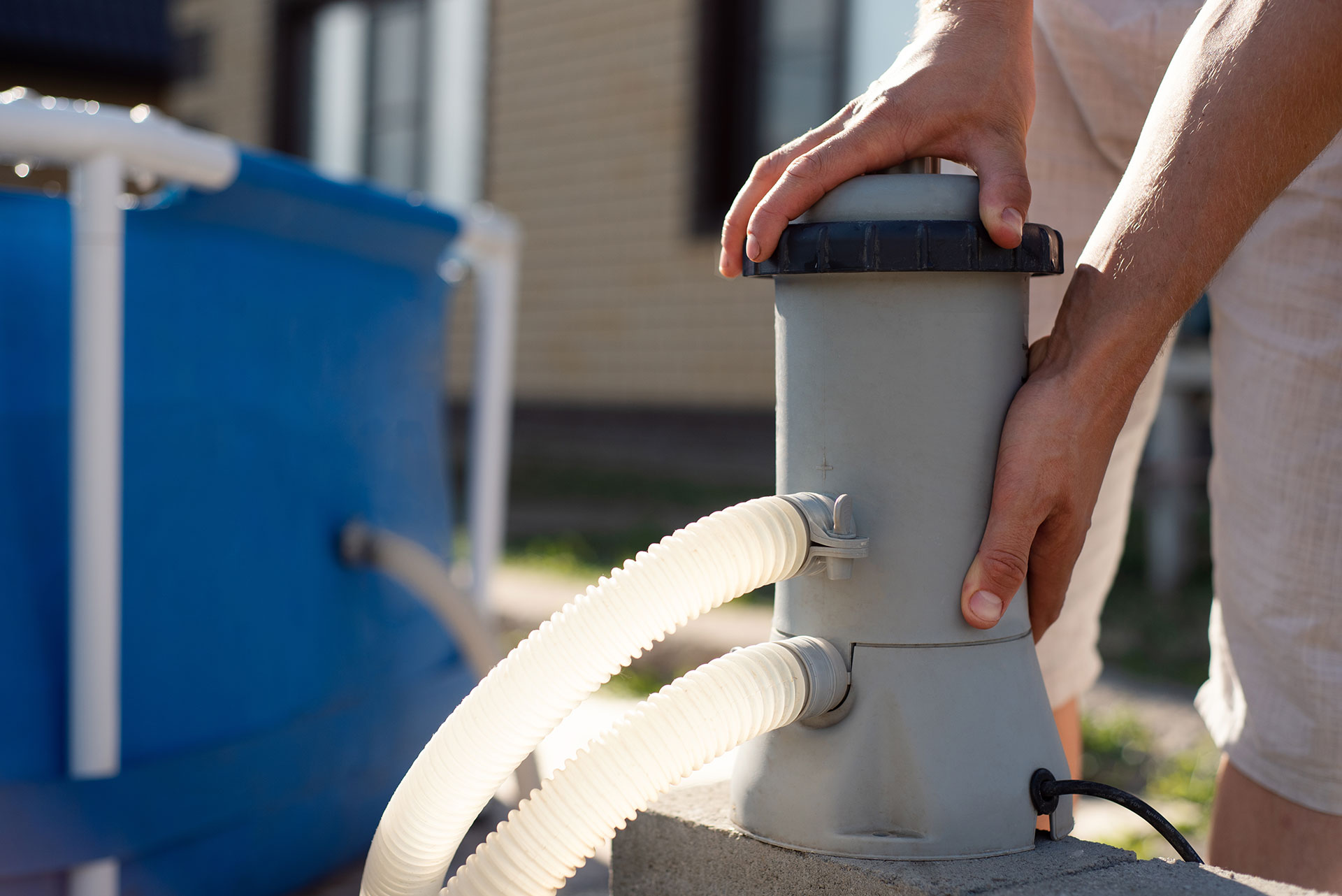
Cartridge filters use a pleated fabric element that traps debris as water passes through. When it gets dirty, you remove the cartridge and hose it off. There’s no backwashing.
What Cartridge Filters Are Like To Maintain
Cartridge maintenance tends to be predictable:
- Hose off the cartridge when pressure rises.
- Do a deeper clean by soaking (a filter cleaner solution) a few times per season.
- Replace the cartridge on a schedule, often every 1 to 3 years depending on quality and usage.
If you don’t want to waste water backwashing, cartridge filters are a strong option. They’re also popular for people who want clear water without the mess of DE powder.
The Downside Of Cartridge Filters
You have to be willing to get hands-on. Pulling a cartridge and rinsing it is not hard, but it’s a bit messy. You need space to rinse it, and you need the patience to spray between pleats.
In rainy climates, cartridges can load up quickly during stormy weeks. That means you might clean them more often in fall and spring when debris is constant.
Best Fit For Rainy Climates?
Cartridge filters often perform very well in rainy areas because they catch finer particles than sand and don’t require backwashing. If you deal with frequent cloudiness after rain, cartridge is usually a noticeable upgrade.
DE Filters: The Clearest Water, The Most Work
DE stands for diatomaceous earth, a powder made from fossilized algae. DE filters use grids coated with DE powder, which catches extremely fine debris. DE is known for producing the clearest water.
What DE Filters Are Like To Maintain
DE maintenance usually includes:
- Backwashing when pressure rises.
- Adding new DE powder after backwashing (you recharge the filter).
- Periodic tear-down and cleaning of the grids.
- Replacing grids when they wear out.
If you like crystal-clear water and you don’t mind a little extra routine, DE can be a dream.
The Downside Of DE Filters
DE is messier and more involved. You need to store DE powder, measure it, and add it properly. You also need to be careful not to run the filter without DE, because it reduces filtration and can damage grids.
There are also disposal considerations. Some areas have rules about where backwash water and DE can go. That’s something to check locally.
Best Fit For Rainy Climates?
DE can handle rainy-season fine debris extremely well, but the maintenance load can feel like too much for many homeowners. If you love the idea of the clearest water possible and you’re okay with more steps, DE is hard to beat.
Which Filter Is Easiest To Maintain?
“Easy” depends on what you hate doing.
If You Want The Least Hands-On Routine:
Sand is usually easiest. Backwash, rinse, done.
If You Want The Best Balance Of Clear Water And Low Hassle:
Cartridge is often the sweet spot. You do have to clean it, but many people prefer rinsing a cartridge to backwashing and dealing with water loss.
If You Want The Clearest Water And You Don’t Mind Extra Steps:
DE wins on filtration quality, but it’s rarely the simplest.
What Works Best In Rainy Climates?
Rain changes two big things: debris load and water chemistry. Storms bring fine particles that make water hazy, and they dilute your water which can throw off sanitizer levels and balance.
In many rainy climates:
- Cartridge filters tend to be the best all-around choice for clarity without constant backwashing.
- DE filters are the best for ultra-fine filtration, especially if cloudiness is your biggest frustration.
- Sand filters are solid for heavy debris and simplicity, but may need extra help for fine particles.
A Quick Tip For Better Results With Any Filter
No matter which filter you have, do this one thing: learn your clean baseline pressure. When your filter is freshly cleaned, note the pressure gauge reading. That number is your reference point. When pressure rises 8 to 10 PSI above that, it’s time to clean or backwash.
This one habit prevents a lot of “my water is cloudy and nothing is working” frustration, because a clogged filter quietly kills circulation and filtration efficiency.
Pick The Filter That Fits Your Swimming Pool Maintenance Routine
The best filter is the one that makes swimming pool maintenance feel manageable. If you want simple and classic, sand works. If you want clearer water and no backwashing, cartridge is a strong everyday choice. If you want the clearest water possible and you don’t mind extra steps, DE is excellent.
Rainy climates demand a little more from your system, but the right filter can make that season feel easier. Instead of fighting cloudy water all fall and spring, you’ll have a setup that matches whatever nature throws into your pool.