

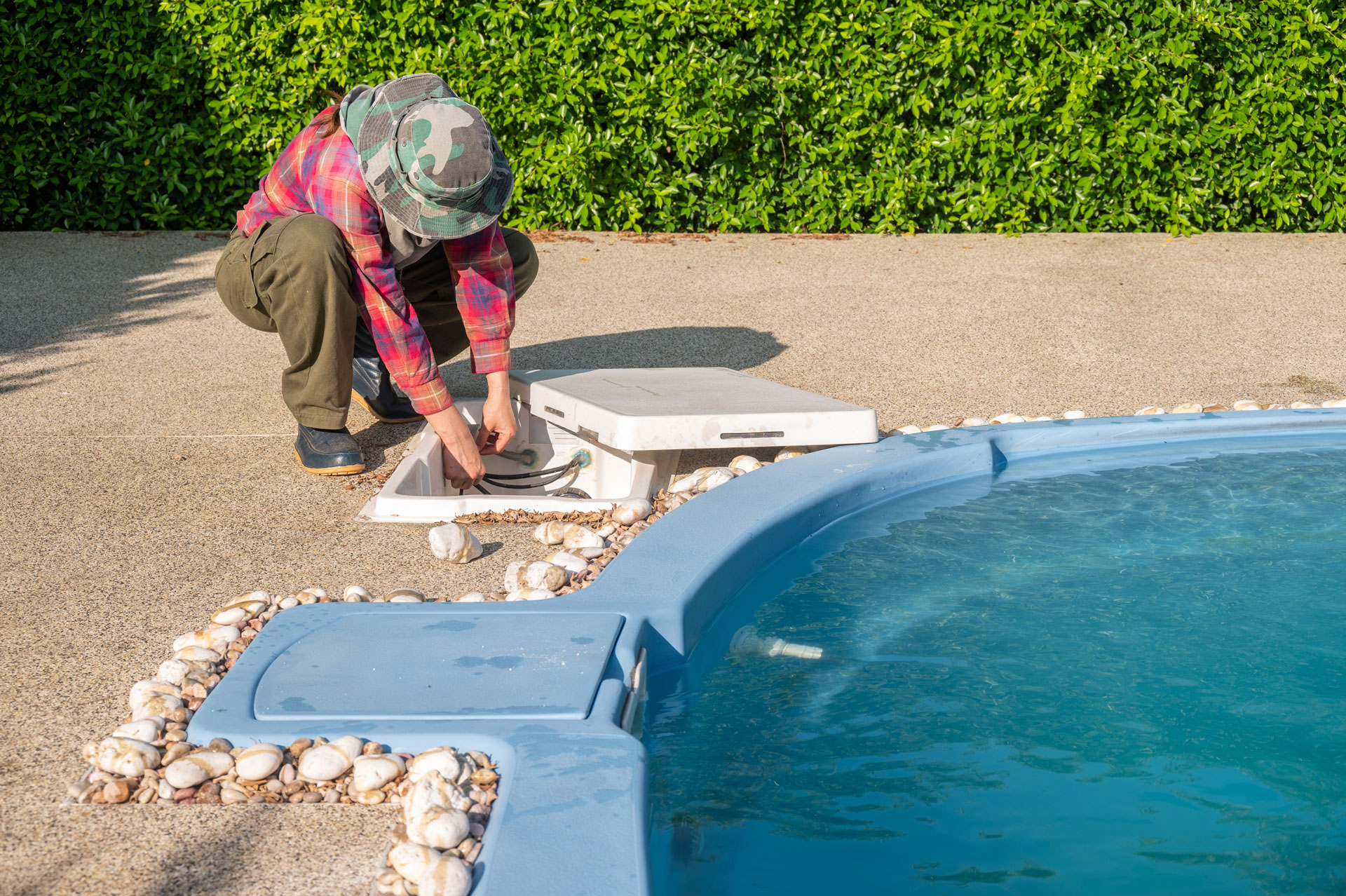
A healthy pool relies on steady circulation. Your pool pump keeps water moving through the filter, heater, sanitizer system, and plumbing, which means it plays a major role in water clarity, chemical balance, and overall pool performance. When the pump starts to fail, the signs aren’t always dramatic at first. Sometimes the water gets a little cloudy. Sometimes the pump gets louder. Sometimes the pressure gauge starts behaving strangely.
Most pump problems don’t manifest all at once. They usually start with little things, like weaker water flow, a new noise, bubbles in the return jets, or water that doesn’t stay clear the way it used to. Those small changes are worth noticing because the pump affects nearly every part of the pool. When it struggles, the water can’t circulate, filter, or balance as well as it should. Catching the problem early can make pool repair much more straightforward and help you figure out whether you are dealing with a simple fix or a pump that is starting to wear out.
Why Pool Repair Often Starts With The Pump
Pool repair is often connected to pump performance because the pump is the heart of the circulation system. Even if your filter, skimmer, heater, and chemical levels are all in good shape, they can’t work properly if water isn’t moving through the system the way it should.
The pump pulls water from the pool through the skimmer and main drain, pushes it through the filter, and sends it back through the return jets. When that process slows down or becomes inconsistent, the whole pool can start showing symptoms. Water may look dull. Chemicals may stop distributing evenly. Debris may collect faster than usual. The heater may struggle. The filter may not be able to do its job.
In many cases, pool owners first notice a water quality problem and assume the problem is chemical. While chemistry can certainly be part of it, poor circulation is often a hidden issue.
The Pump Is Making Loud Or Unusual Noises
Pool pumps aren’t silent, so they should have a fairly consistent operating sound. If your pump suddenly starts screeching, grinding, rattling, humming, or making a high-pitched whine, something could be wrong.
A screeching or whining noise may point to worn motor bearings. Grinding can suggest internal wear or debris caught in the impeller. Rattling may come from loose parts, vibration, or an issue with the pump housing. A humming sound with little or no movement may mean the motor is struggling to start.
The important thing is to notice changes. If the pump has always sounded one way and suddenly sounds different, don’t ignore it. Strange noises usually mean a mechanical part is under stress, and continuing to run the pump may make the damage worse.
The Water Isn’t Circulating Properly
Weak return flow is one of the clearest signs that something is wrong with the pump or circulation system. If the jets feel weaker than normal, the pump may not be moving enough water.
A few different things can cause weak water flow. Sometimes it’s as simple as a clogged pump basket or a filter that needs to be cleaned. Other times, air may be getting into the suction line, debris may be stuck in the impeller, or the motor may be starting to lose strength.
When water isn’t moving the way it should, the whole pool starts to feel it. Chemicals don’t mix as evenly, heated water may not reach every area, and leaves or dirt can collect in the same spots instead of making their way to the skimmer. If you keep noticing certain corners or steps where debris or algae gathers, the pump may not be circulating the water well enough.
The Pump Keeps Losing Prime
A pool pump needs to stay primed, which means the pump housing should remain filled with water while the system is running. If the pump keeps losing prime, you may notice air bubbles in the pump basket, low water flow, or the pump struggling to pull water.
This is a common pool repair issue, and it usually means air is getting into the system somewhere. Sometimes the water level is just too low, so the skimmer starts pulling in air instead of only water. Other times, the pump lid may not be sealed tightly, the O-ring may be worn, or the pump basket may not be sitting the way it should. A small leak in the suction-side plumbing can also cause the pump to lose steady flow, even if the leak isn’t obvious at first.
A pump that regularly loses prime should be addressed quickly. Running a pump without enough water can damage the motor, seals, and internal components.
You See Air Bubbles Coming From The Return Jets
A few bubbles when the pump first kicks on are usually not a big deal. However, if you keep seeing bubbles coming from the return jets, that’s a sign air is getting pulled into the system somewhere.
Sometimes the fix is simple. The pool water may be a little too low, the pump lid may not be tightened all the way, or the lid seal may be worn out. It can also happen after cleaning the pump basket if the lid wasn’t put back on right. In other cases, the air may be coming from a cracked fitting, leaky valve, or another spot in the plumbing.
Either way, air in the system makes the pump work harder than it should. It can weaken water flow, reduce filtration, and even affect how well the heater works.
Start with the easy checks first. Check the water level, pump lid, basket placement, and any seals you can see. If those all look fine and the bubbles continue, the leak may be somewhere less obvious.
The Pump Is Leaking Water
Water around the pump is never something to overlook. A small drip may seem harmless, but leaks often get worse over time.
A pool pump can leak from several places, including the pump lid, drain plugs, unions, shaft seal, or pump housing. A lid or plug leak may be a simple seal issue. A shaft seal leak is more serious because water may drip near the motor, which can eventually lead to motor damage. Cracks in the pump housing can also be a sign that the pump is close to the end of its life.
If the area around your pump is wet and it hasn’t rained recently, dry the area, run the system, and watch where the water appears. That can help narrow down the source.
The Motor Runs Hot Or Shuts Off
Pool pump motors can get warm, but they shouldn’t smell hot, trip breakers repeatedly, or shut themselves off during normal operation. If the motor overheats, it may be struggling because of poor ventilation, worn bearings, electrical problems, blocked flow, or internal motor failure.
Do not keep resetting the breaker without finding the cause of the problem. Electrical issues around pool equipment should be handled carefully because water and electricity are an incredibly dangerous combination.
If the pump runs for a while and then shuts off, the motor may be overheating and triggering its thermal protection. In this case, the pump needs attention before it fails completely.
Your Energy Bill Has Gone Up
A failing or inefficient pool pump can use more energy than necessary. If your electric bill rises but your pool routine hasn’t changed much, the pump may be working harder than it should.
Older single-speed pumps are already less efficient than newer variable-speed models, but even a newer pump can waste energy if it’s clogged, poorly sized, or struggling mechanically. A pump that has to fight against blockage, air leaks, or failing internal parts may run longer while doing less actual work.
Energy use alone doesn’t prove the pump is failing, but paired with weak flow, noise, cloudy water, or overheating, it can be another clue.
The Water Keeps Turning Cloudy Or Green
Cloudy or green water is typically treated as a chemical issue, and sometimes it is. However, if you keep balancing the water and the same problem returns, circulation might be the real issue.
When the pump is weak, the water may not pass through the filter as often or as forcefully as it needs to. Fine debris, pollen, and other contaminants can linger in the water instead of getting filtered out. Algae also has an easier time showing up in spots where the water sits too still. This can become especially noticeable after a storm, a busy swim day, or any stretch of time when the pump hasn’t been running the way it should.
Before repeatedly adding shock or clarifier, check the pump, filter pressure, skimmer basket, pump basket, and return flow. Chemicals work best when the circulation system supports them.
When Should A Pool Pump Be Repaired Or Replaced?
Not every pump problem means the whole unit needs to be replaced. Some issues are relatively simple, such as a clogged basket, worn O-ring, loose lid, dirty filter, or minor seal replacement. Other problems, like a failing motor, cracked housing, recurring leaks, or repeated overheating, may make replacement more practical.
Also, if the pump is newer and the issue is isolated, repair may make sense. If the pump is older, inefficient, noisy, and frequently breaking down, replacement may save more money and frustration over time.
The best first step is to pay attention to the symptoms. A failing pump usually gives warning signs before it stops completely. Strange noises, weak flow, air bubbles, leaks, overheating, and recurring water quality issues all deserve a closer look.